Services

The hard part is the system behind it.

Logicdriven takes on the architecture, software, data, and production problems that determine whether courseware works once—or keeps working as the program evolves.

A useful place to begin

Bring the constraint, not a predetermined answer.

You may need a custom application. You may need a better content model, a production tool, or one careful integration.

We begin by understanding where the work slows down, where information is duplicated, what must remain flexible, and who needs to own the result. The technology follows from that.

The technology follows from the constraint, not the other way around.

Where the work slows downWe look for the bottleneck before proposing the tool that removes it.
What must stay flexibleThe parts most likely to change get the loosest coupling.
Who owns the resultHandover is a design input, not a closeout task.

Courseware modernization

Conversion should not erase the value of the course.

Move aging courseware into current environments while preserving the instructional structure, behavior, assets, and institutional knowledge that make it valuable. A data-driven foundation also creates useful context for automation and AI-assisted analysis.

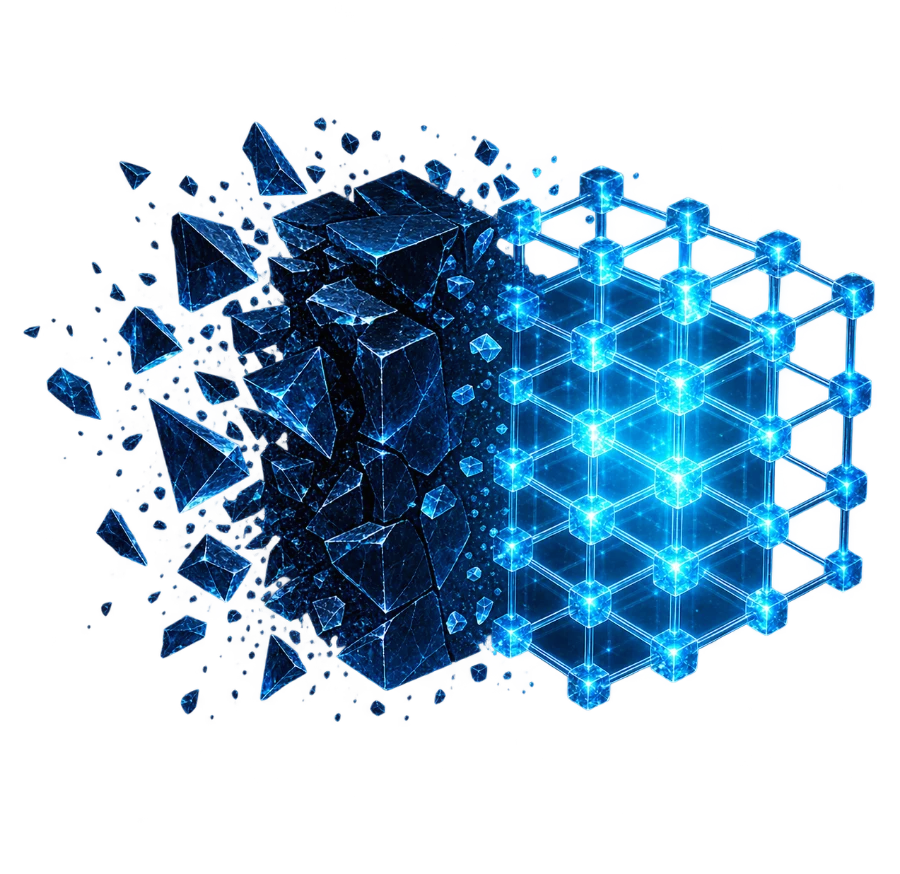
Fragmenting blocks of legacy courseware resolving into an intact, illuminated lattice
01

Courseware systems and architecture

Define the shared foundation for authoring, delivery, assessment, simulation, reporting, and lifecycle support.

  • Structured content and data models
  • Authoring and production workflows
  • Courseware Engine design
  • SCORM, xAPI, LMS, and enterprise integration
02

Custom software and extensions

Build the focused tools that make a specialized process practical without forcing the entire organization into a generic workflow.

  • Impression Connect extensions
  • Authoring and QA utilities
  • Workflow and reporting automation
  • Web and Windows applications
03

Simulation development

Connect instructional procedures with the rules, state, interfaces, and learner actions that make simulation-based training meaningful.

  • Procedural and state models
  • Simulation control architecture
  • Unity and external-system integration
  • Remediation and performance data
04

Migration and modernization

Move valuable content out of aging delivery technology and into structures that support today’s needs without discarding what still works.

  • Legacy courseware analysis
  • Content extraction and transformation
  • Flash and proprietary-format transition
  • Reusable conversion pipelines
05

Production support and automation

Resolve bottlenecks across the production lifecycle and give authors, reviewers, developers, and managers better visibility into the work.

  • Custom reports and documents
  • Quality-assurance utilities
  • Packaging and deployment support
  • Troubleshooting and lifecycle maintenance
06

Analysis, proposals, and training

Apply practical courseware and software experience before the architecture, estimate, or production approach becomes expensive to change.

  • Requirements and solution analysis
  • Technical proposals and estimates
  • Developer and author training
  • Implementation planning

What our approach protects

The ability to change your mind without starting over.

01 / PORTABILITY

Keep information usable

Separate durable content and rules from the presentation technology that will inevitably change around them.

02 / OWNERSHIP

Avoid artificial dependency

Favor understandable structures, clear documentation, and appropriate source access so the capability remains yours.

03 / PRODUCTION

Respect the people doing the work

A sound architecture still fails if authors and reviewers cannot use it efficiently. Workflow is part of the design.

04 / LONGEVITY

Design beyond the first release

Plan for maintenance, new delivery targets, content reuse, and requirements nobody can fully predict today.

Let’s turn the complicated part into a system people can actually use.

Start the conversation